How contracts end, and applying the rules to cases
A contract is discharged when it comes to an end and the parties are freed from their promises. It can end by performance, agreement, breach, impossibility, lapse of time or death. Paper 1 asks which of these discharge a contract, and reminds you that a change of mind does not.
By the end of this page you can
- Explain what it means for a contract to be discharged
- Name the six ways a contract can be discharged
- Tell a void contract from a voidable one
- Apply the rules to a short case
Goals tick themselves off as you try the activities below.
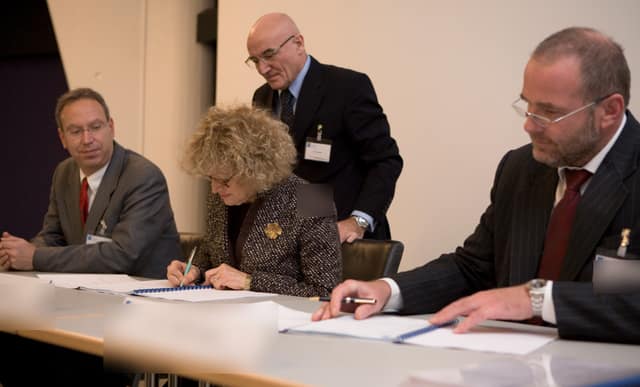
Photo: ESO, CC BY 4.0, via Wikimedia Commons. Name cards and badges blurred, resized, JPEG q72.
Signing creates the promises. This page is about how those promises end.
How often it shows up in past papers
All papers18 of 23 papers
Last 54 of 5 · 2023–2026
Paper 1 counts come from our past-paper bank of CSEC Principles of Business Paper 1s. The last-5 row shows how often it came up in the five most recent papers.
Inside this topic
- Three endingsLocked
- Six ways to endLocked
- Key termsLocked
- Test yourselfmarkedLocked
- Practise for real · 11 past questionsLocked