Inheritance and genetic crosses
Cross a purple-flowered pea with a white-flowered one and every offspring is purple. Cross two of those offspring and white flowers come back, in about one plant in four. The white allele was there all along, hidden by the dominant purple one. Genetic crosses let you predict results like this.
By the end of this page you can
- Explain dominant, recessive and codominant traits with real examples
- Tell genotype from phenotype, and homozygous from heterozygous
- Work through a genetic cross from parents to ratio
- Define the seven genetics terms the syllabus lists
- Predict ratios and chances from a Punnett square
Goals tick themselves off as you try the activities below.
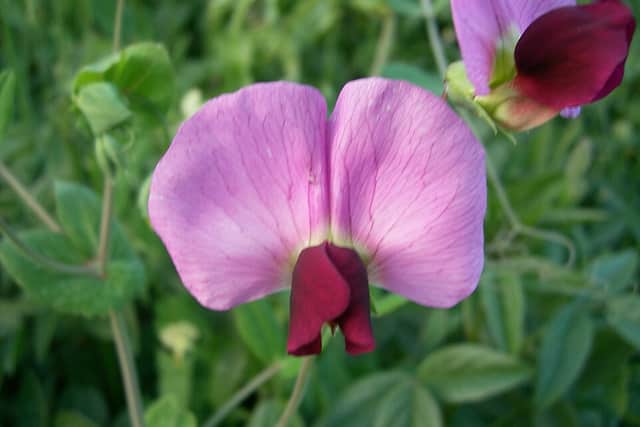
Photo: Vikiçizer, CC BY-SA 4.0, via Wikimedia Commons. Cropped, JPEG q66.
A purple pea flower. In peas, purple flower colour is dominant to white; Gregor Mendel used crosses like this to work out the rules of inheritance.
How often it shows up in past papers
Paper 1 counts come from our past-paper bank of CSEC Biology Paper 1s. Paper 2 is not included yet.
Four traits the syllabus names
Each one is inherited in a slightly different way. Tap each card.
Seven words, six on a ring
Examiners test these words in almost every paper; heterozygous is on the term cards.
What does it mean?
Tap a word to see its meaning.
Pedigree charts: squares are males, circles females, shaded shapes have the trait. Unaffected parents with an affected child must both carry the recessive allele.
Work a cross
Two purple pea plants, both Pp, are crossed. Put the steps of the genetic diagram in order. Drag or tap each card into its slot.
What do you write first?
Seven terms to know cold
Say what each term means before you flip the card. These seven are listed word for word in the syllabus.
Six quick questions, then a real one
Pick an answer to see why it’s right or wrong.
The phenotype of an organism is
Which genotype is heterozygous?
A purple pea plant (Pp) is crossed with a white one (pp). What ratio of offspring is expected?
Two parents with normal pigment are both carriers of albinism (Aa). What is the chance their child has albinism?
A person with blood group AB shows
Two homozygous plants are crossed: tall (TT) × short (tt). The offspring are
exam style · 3 marks
Two parents are both heterozygous for the sickle cell allele. Use a genetic diagram to find the chance that their child will have sickle cell anaemia.
Sign in to have your answer marked, or check it against the mark scheme. Sign in
Practice questions are written by My V.I.P. Academy. They are not official CXC papers.