Human reproductive systems and the menstrual cycle
The reproductive systems make the gametes, sperm and eggs, and bring them together. In women, hormones also run a monthly menstrual cycle that prepares the uterus for a possible pregnancy.
By the end of this page you can
- Say where sperm and eggs are made and where a baby grows
- Describe the menstrual cycle and the hormones that control it
- Follow sperm from the testis to the oviduct
- Define ovulation, oestrogen, progesterone, oviduct and uterus
- Explain the roles of oestrogen and progesterone
Goals tick themselves off as you try the activities below.
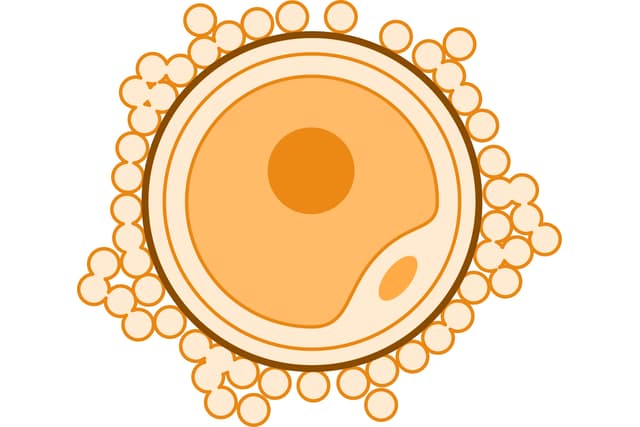
Photo: Ryan Kissinger, NIAID, Public domain, via Wikimedia Commons. Resized onto a white background, JPEG q72.
An egg is released from an ovary about once a month, still wrapped in a few follicle cells.
How often it shows up in past papers
Paper 1 counts come from our past-paper bank of CSEC Biology Paper 1s. Paper 2 is not included yet.
Two systems, one aim
Tap each card.
About 28 days
Tap each step of the menstrual cycle.
What happens when?
Pick a step on the list.
In pregnancy, progesterone stays high (from the corpus luteum, then the placenta), so there is no menstruation and no ovulation until after the birth.
The path of sperm
Drag or tap each card into its slot.
Where are sperm made?
Seven terms to know cold
Say what each term means before you flip the card. Name the gland that makes each hormone.
Six quick questions, then a real one
Pick an answer to see why it’s right or wrong.
Where are sperm made?
Where are eggs made?
After menstruation, which hormone thickens the uterus lining again?
In a 28-day cycle, ovulation usually happens around day
During pregnancy, menstruation stops because
The scrotum holds the testes outside the body because sperm develop best
exam style · 4 marks
Describe the roles of oestrogen and progesterone in the menstrual cycle.
Sign in to have your answer marked, or check it against the mark scheme. Sign in
Practice questions are written by My V.I.P. Academy. They are not official CXC papers.