How people affect natural resources
Forests, fish, minerals and fuels are natural resources. We need them, but taking too much, too fast, harms the land, the sea and our own health.
By the end of this page you can
- Describe how people use forest, marine, mineral and energy resources
- Explain six harms human activity does to the environment
- Follow deforestation from felled trees to floods
- Tell renewable from non-renewable resources
- Explain the harm done by farm chemicals and garbage
Goals tick themselves off as you try the activities below.
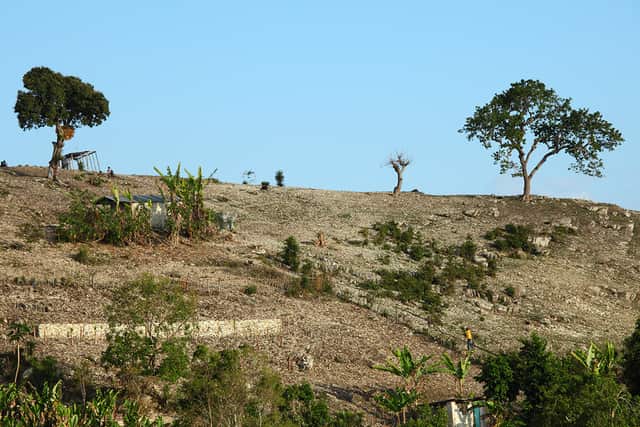
Photo: Biodiversitycenter, CC BY-SA 4.0, via Wikimedia Commons. Resized, JPEG q64.
A cleared hillside on La Gonâve, Haiti. With the trees gone, rain washes the soil away.
How often it shows up in past papers
Paper 1 counts come from our past-paper bank of CSEC Biology Paper 1s. Paper 2 is not included yet.
Four resources under pressure
Tap each card.
What the damage costs
Tap a harm to see how it happens.
How does it happen?
Pick a harm on the list.
Overpopulation makes every harm bigger: more people need more food, water, land and energy, and make more waste.
Cutting the forest
Drag or tap each card into its slot.
What starts it?
Six terms to know cold
Say what each term means before you flip the card. Then give a Caribbean example.
Six quick questions, then a real one
Pick an answer to see why it’s right or wrong.
Which is a non-renewable resource?
Cutting down forests on hillsides leads to
Overfishing means
Mercury from gold mining is harmful because it
Dumped garbage harms human health mainly because it
Why can damage to reefs and forests hurt a Caribbean economy?
exam style · 4 marks
Explain TWO negative effects of using agricultural chemicals and TWO negative effects of improper garbage disposal on the environment.
Sign in to have your answer marked, or check it against the mark scheme. Sign in
Practice questions are written by My V.I.P. Academy. They are not official CXC papers.