Fruits, seeds and dispersal
After fertilisation the flower changes: the ovary becomes the fruit and each ovule a seed. Then the seeds must travel away from the parent plant to grow.
By the end of this page you can
- Explain how fruits and seeds are adapted for dispersal by water, wind, animals and mechanism
- Say what each part of a flower becomes after fertilisation
- Follow a flower to a new plant
- Define fruit, seed, pericarp, testa and dispersal
- Describe two fruits adapted for different kinds of dispersal
Goals tick themselves off as you try the activities below.
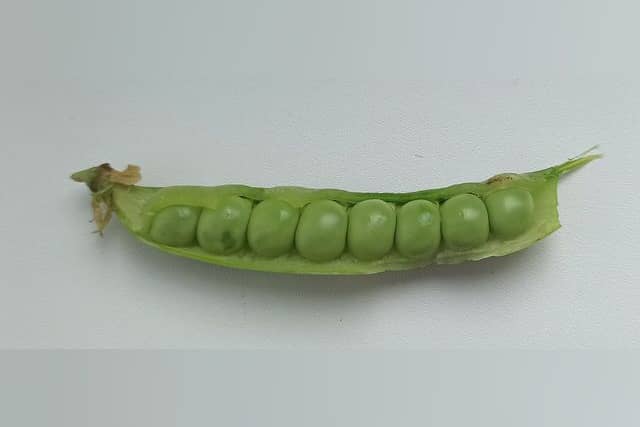
Photo: Sokolikmawwer0, CC BY-SA 3.0, via Wikimedia Commons. Resized and set on a blurred copy of its own background, JPEG q70.
A pea pod is a fruit: the ovary wall around a row of seeds, each one a fertilised ovule.
How often it shows up in past papers
Paper 1 counts come from our past-paper bank of CSEC Biology Paper 1s. Paper 2 is not included yet.
Getting away from the parent
Tap each card.
After fertilisation
Tap a part of the flower to see what it becomes.
What becomes what?
Pick a part on the list.
Why travel? Seeds that land far away compete less with the parent and with each other, and can colonise new places.
From flower to new plant
Drag or tap each card into its slot.
What starts it?
Seven terms to know cold
Say what each term means before you flip the card. Always link a feature to its dispersal method.
Six quick questions, then a real one
Pick an answer to see why it’s right or wrong.
After fertilisation, the ovule becomes the
A coconut is dispersed mainly by
A fruit covered in hooks is dispersed by
Seed dispersal is important because it
The pericarp of a fruit develops from the
Seeds in a guava eaten by a bird survive because they
exam style · 4 marks
Describe how TWO named fruits are adapted for dispersal by different methods.
Sign in to have your answer marked, or check it against the mark scheme. Sign in
Practice questions are written by My V.I.P. Academy. They are not official CXC papers.